
I am certainly no stranger to that moment when someone you’re dating seems to pull back slightly and your whole body reacts like they just ended things.
Maybe they say, “I want to spend this weekend with just my friends.”
Or their tone shifts.
Or they respond in a way that feels flatter than usual.
Your brain immediately fills in:
“They’re done with me.”
There’s a mismatch happening. And the mismatch isn’t between you and them.
It’s between what happened and what your brain thinks happened.
You notice the anxiety the second it hits your chest, but what you didn’t notice is the real key to understanding this whole thing. And before we solve a problem, we have to actually know what we’re dealing with.
Care to join me in uncovering the truth, my dear Watson? Let’s go.
Real-Life Micro Scenario
We’ve all been here.
You send a very clearly hilarious meme that perfectly matches the inside joke the two of you have been bouncing around. You see the typing dots immediately — YAY!
And then… they “heart” it.
And then… nothing.
How do they have time to instantly respond and not say something about your superior comedic timing?
Your stomach drops.
You start analyzing the heart emoji like you’re Dr. House and you’ve found an anomaly.
You check when they were last active.
You hop through all their socials.
You even reread old messages to compare tone.
And you just can’t seem to shake the horrible feeling, even though you know this shouldn’t be a big deal… right?! RIGHT?!
This is your brain on what feels like an ad from 90s during the infamous War of Drugs.
This is your brain interpreting neutral behavior as rejection.
What’s Actually Happening Here?
Here’s the quick breakdown:
- Humans are pattern-recognition machines.
- When we don’t have information, our brain fills in the blanks.
- For anxious brains, the default interpretation is danger, not neutrality.
- Dating activates old survival patterns.
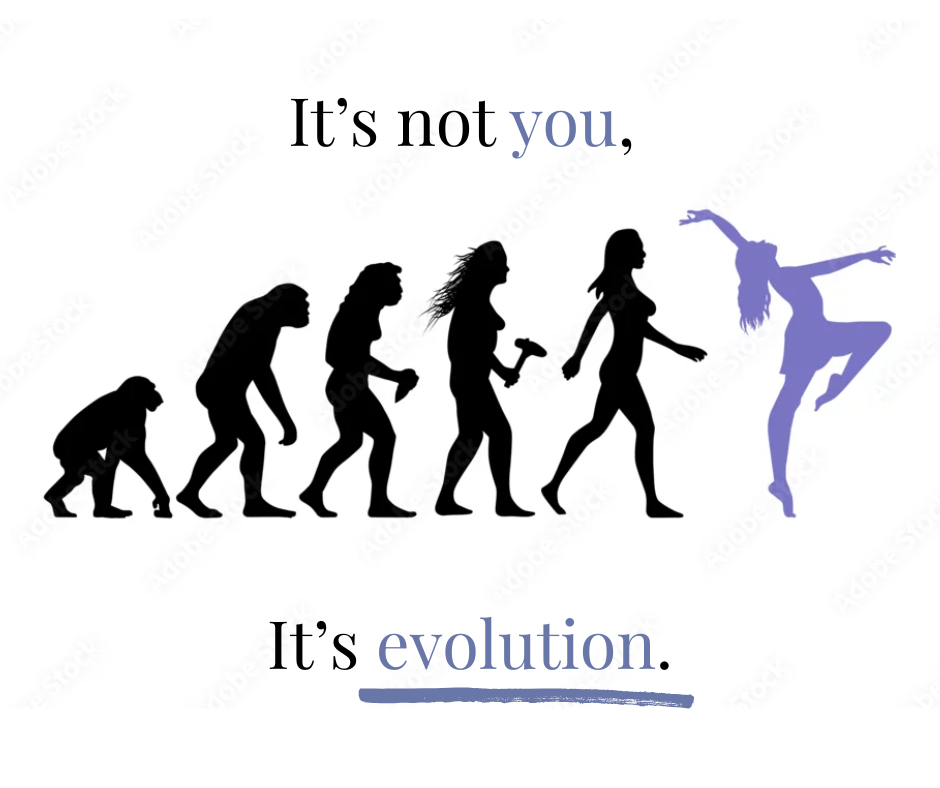
- And the fear of rejection is ancient and wired into us.
This isn’t irrational. It’s evolution and nervous system wiring.
The Science Behind Why Your Brain Assumes Rejection
Let me reiterate two key points that form the foundation of everything I teach:
- Your thoughts create your feelings.
What makes you anxious might not make me anxious…because we interpret things differently. - Nervous systems hate uncertainty.
They rush to close the loop as fast as possible.
They want to “solve” the moment and know the truth immediately.
And what pops up first?
Old beliefs.
“I’m not enough.”
“They’re going to leave.”
“This always happens to me.”
Your brain prefers a known pain over an unknown possibility.
That old saying “the devil you know vs. the devil you don’t” exists for a reason.
So when you’re dating, and things feel uncertain, your nervous system reacts to that ambiguity like you’re in danger.
Newness + vulnerability + uncertainty = prime (and primal!) anxiety soup.
The Pattern: The “Neutral → Rejection” Shortcut
So how do we get from a totally neutral moment to spiraling into “I’m worthless and this will never work”?
Let’s walk through it.
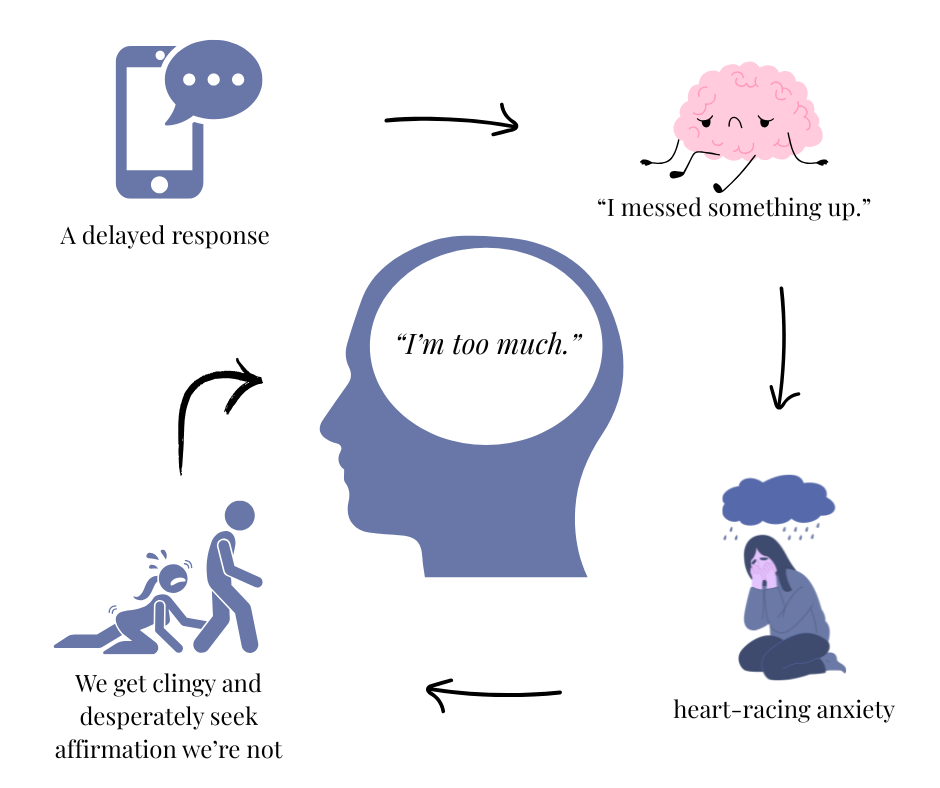
1. Neutral behavior happens
Shorter reply.
No emoji.
A delayed text.
Tone that feels a little flat.
2. Brain interprets it
Your brain uses familiar data and the “safest” (aka most protective) interpretation:
“They’re upset.”
“They’re done.”
“I messed something up.”
3. Body reacts
Your body feels the vibration created by those thoughts:
Stomach drop.
Heart racing.
Tension building.
4. Old beliefs activate
Your brain now has to interpret the body sensation too. Cue the greatest hits:
“I’m too much.”
“I get rejected.”
“I ruin things.”
5. Behavior follows
When we believe these thoughts, we:
over-text
withdraw
over-explain
perform
cling
obsess
We desperately don’t want these beliefs to be true. Yet the way we react often reinforces them.
We think we’re observing “proof” of the belief…
not realizing we’re accidentally creating some of the evidence.
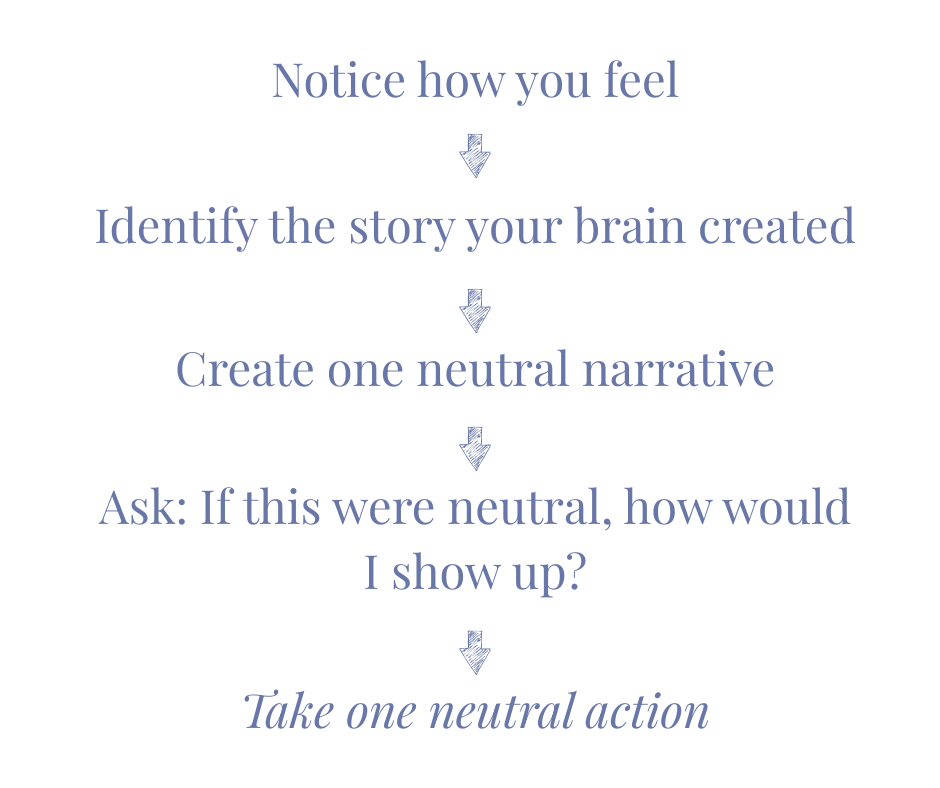
The Tool: The ‘Neutral First’ Practice
Here’s where I give you a different option…one you can use today!
Step 1: Notice how you feel
Think about the situation you’re anxious about.
How do you feel?
If you can’t name the exact emotion, use open or closed.
Step 2: Identify the story your brain created
Why do you feel this way? One sentence.
No “I don’t know.”
Guess if you have to.
Examples:
“I feel closed because I always get rejected.”
“I feel anxious because I ruin things.”
Step 3: Create one neutral narrative
Neutral, not positive.
Examples:
“I actually don’t know what this means yet.”
“It’s possible I haven’t been rejected.”
Step 4: Ask: If this were neutral, how would I show up?
If you felt fine about that short text or long response time, what would you be doing right now?
Step 5: Take one neutral action
Example:
Let’s say you’re anxious that you’ve ruined things and you want to text them.
If you were feeling calm, grounded, secure, you might still send a text — but what you send would be completely different.
Ask yourself:
“If I were feeling curious, calm, and confident, how would I check in?”
This practice isn’t about tricking yourself.
It’s about interrupting a pattern long enough to see reality — from a place of wholeness instead of panic.
Time to Reframe
For everyone in the back:
Your nervous system is loud, not accurate.
Not everything you feel is a sign that something is actually happening.
Your feelings are information, not prophecy.
If someone truly is pulling away and you show up calm, grounded, and self-respecting, you will see it clearly.
And you’ll be far less likely to make their behavior mean something negative about you.
Closing Validation
You are not broken.
You are not too sensitive.
You are not imagining things.
Your very human brain is working exactly as it should . It’s just using outdated tools to try to protect you.
And now you have a new one.
You don’t have to keep guessing what someone else feels.
I can help you get clarity from the inside out.
Schedule a free consultation with me this week.
I’ll listen without judgment and help you get grounded so you can move forward from a place of confidence and peace.
https://calendly.com/bwyac/consult
Or, if that feels like too much right now, submit a question anonymously below.
I’ll answer it to the best of my ability on Instagram.
I hope to hear from you. I can’t wait to show you what’s possible.
I’ve got you.